
Demand for Green Spaces Is Reshaping the Office Market
As Generation Z becomes the dominant force in the workplace, their desire for outdoor spaces is profoundly influencing the design and operation of office buildings. Data shows that 88% of Gen Z believe indoor work has a negative impact on mental health, prompting companies to adopt green spaces as a new office benefit. This article explores how green spaces, from design and maintenance to return on investment, are becoming a core element in attracting tenants and enhancing the value of office buildings.
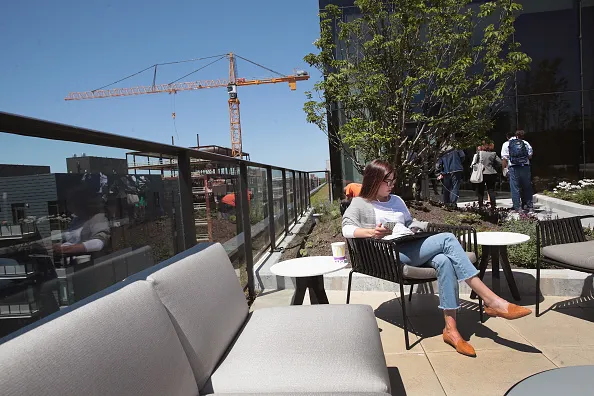
Generation Z is an environmentally conscious generation, and they are increasingly eager to engage with transparent outdoor spaces. The author believes that this generation's interest in outdoor spaces is becoming a key factor influencing the direction of the office building market.
These young employees are flooding into the corporate world and reshaping the workplace ecosystem, but the evolution of office spaces has not been smooth sailing. Gen Z employees expect far more from an office than just a desk, yet for a long time, companies have been reluctant to invest in this. Now, this situation is changing. Companies are gradually recognizing that the workplace has a direct impact on productivity—when employees feel that the office environment aligns with their needs, they work harder and more efficiently.
As a result, companies are upgrading office spaces by adding attractive amenities such as gyms, snack bars, and meditation areas. Given Gen Z's strong interest in outdoor spaces—88% of respondents indicated that working indoors negatively affects their mental health—aesthetic and green areas are poised to become the next benefit offered by companies.
Design is key
Outdoor spaces are not exclusive to large office buildings; they can be achieved in offices of all sizes and shapes. You don't need to own vast tracts of land to create outdoor areas that become an asset to the building. From rooftop terraces and courtyards to front lawns and gardens, the options are diverse.
Drawing on decades of professional experience, I believe that the most impactful office landscape projects are those that fully consider the natural environment surrounding the building and the building's own characteristics. They use a mix of hardscape and softscape to create customized spaces that seamlessly integrate with the office building.
When an office building is located in a busy, highly commercialized area, facility managers tend to choose modern-style landscapes: crisp lawn lines, cool-toned square hard paving, paired with bright white pavers and planters, and flowers in soft hues. When the office is in a quieter, more creative area, managers opt for flowing curved designs with gravel paths, rounded stone seating, and shrubs and vibrant flowers.
I recommend that facility managers adopt this site-specific, customized approach. Ultimately, a green space that feels natural rather than contrived adds more value to your lease, so it's worth taking the time to get the design right.
Long-term maintenance is fundamental
Once the visual appeal and atmosphere of the outdoor space are established, the next aspect that cannot be overlooked is maintenance. This is even more important than design. You can have the most beautiful, meticulously designed outdoor space, but if you let weeds invade the walkways and the lawn turn yellow and brittle, then the expensive capital expenditure invested in beautifying the space amounts to little.
The secret to maintenance lies in infrastructure and procedural planning: irrigation systems keep flower beds healthy and nourish lawns, programmed water features, and regular lawn and flower bed care. Facility managers should develop a written, goal-oriented maintenance plan, not just to pass inspections. This requires viewing the property from the perspective of tenants who commute daily. Maintaining this perspective means every element of the landscape moves in the same direction, and maintenance efforts remain consistent. This way, problems can be resolved before they escalate into costly, time-consuming troubles.
Companies that excel in design and maintenance will reap the rewards, as green spaces help attract Gen Z back to in-office work. Research shows that companies are already willing to pay a 7.1% 'green premium,' and this figure could climb further as more green businesses attract tenants willing to pay higher rents. This means that managers who get ahead by adding high-end amenities like well-designed and well-maintained green spaces will see substantial returns on investment.
The workforce is increasingly younger, and traditional office units cannot lure them back to the office. High-quality outdoor spaces will drive the office building market, pushing workplaces toward a greener, more open evolution.
