
Deep Dive
来自我们记者的行业洞察

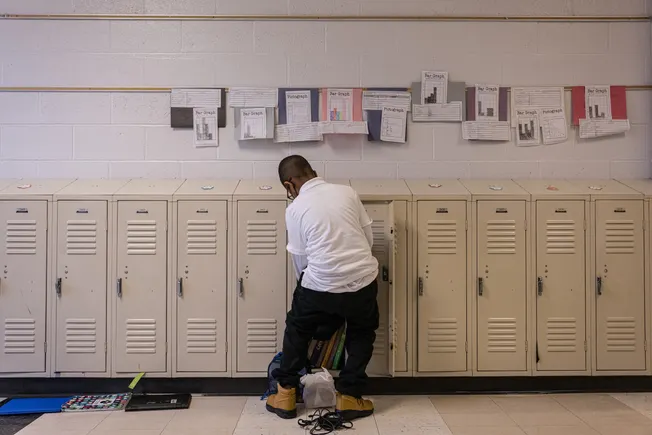
How Schools Without Lockers Are Reshaping Campus Architecture
Wayzata High School in Plymouth, Minnesota, permanently removed rows of lockers in the middle of corridors during its renovation, and many schools nationwide are following suit. K-12 architecture experts note that new high schools tend to avoid traditional full-school locker layouts, a trend that emerged before the COVID-19 pandemic, which accelerated its decline. Students no longer need lockers due to digital learning resources, but educators and parents still miss the social memories associated with lockers. Design firms are transforming former locker areas into collaborative spaces while retaining activity-specific lockers.

New York City's Commercial Waste System Overhaul: Five Key Takeaways
New York City recently released 65 contracts for the district-based reform of commercial waste collection, marking a major step in implementing this significant change. However, transitioning from an open market to district-based franchising involves complex adjustments, and it remains to be seen how implementation details, environmental and safety benefits will materialize. This article focuses on five key issues: initial reactions, fleet electrification, safety training, recycling investments, and implementation timelines.

2024 Decarbonization Progress: Urgency, Technological Innovation, and Capital Investment Go Hand in Hand
In 2024, pressure for building decarbonization continues to escalate. JLL predicts that by 2030, low-carbon space demand will only be met by 25%; investors have strong expectations for premiums on green-certified buildings; policies and regulations are being introduced intensively in New York, Detroit, California, and other places. Experts point out that energy efficiency assessments, digital tools, and tax incentives are key paths to initiating decarbonization, but inflation and skilled labor shortages remain practical challenges.


How Facility Managers Can Navigate the New Landscape of Returning to the Office in 2024
In 2024, the momentum for companies to return to the office has strengthened, but hybrid work still dominates. Facility managers need to balance space utilization and employee experience, using data-driven decision-making. Based on reports from VTS, JLL, CBRE, and others, this article analyzes trends in office strategies, space utilization, tenant bargaining power, and technology applications.

Climate Change Raises Commercial Property Insurance Costs: Five Strategies for CFOs
Disasters such as tornadoes, floods, and hurricanes triggered by climate change are upending the foundations of CFO risk management. U.S. commercial property insurance costs rose 15% last year, the largest increase in over three decades. Experts recommend that CFOs address rising costs through five strategies: comprehensively reviewing risk tolerance, strengthening cooperation with insurers, increasing disaster prevention investments, considering innovative products like parametric insurance, and leveraging data analysis to optimize risk pricing.

The 'S' in ESG: Social Data Is Hard to Quantify, Posing Reporting Challenges
In recent years, the importance of the social factor ('S') in ESG has risen, but social data, due to its subjectivity and privacy restrictions, is difficult to collect and compare uniformly, posing challenges for corporate reporting and investor assessment. This article analyzes the difficulties in social data reporting, regulatory dynamics, and trends in framework integration.

Heat pumps have broad prospects, but retrofitting commercial buildings faces practical challenges
Heat pump technology is gaining increasing attention in the United States, but retrofitting existing commercial buildings faces practical challenges such as physical space limitations, high costs, and grid pressure. This article reviews current promotion progress, retrofit difficulties, and expert opinions from the industry.
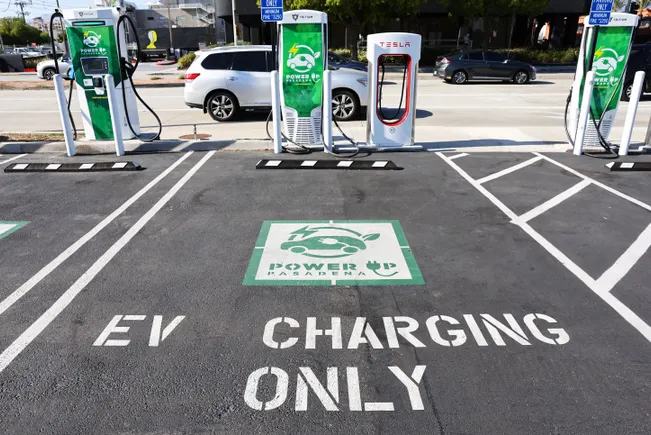
U.S. Electric Vehicle Fast-Charging Deployment Slows Amid Utility and Charging Company Disputes, with a Huge Demand Gap
The U.S. electric vehicle transition requires large-scale deployment of fast-charging stations, but disputes between utility companies and charging service providers over ownership of charging infrastructure are slowing deployment. Analysts from both sides agree on the huge demand but diverge on who should lead construction. This article reviews cost recovery, policy games, public-private cooperation models, and the latest industry developments.