
The economic returns of improving indoor air quality can offset upgrade costs and enhance building energy efficiency
The facility management industry is facing multiple challenges related to indoor air quality, energy efficiency, and decarbonization goals. Experts from the American Lung Association, Johnson Controls, and the International WELL Building Institute state that improving indoor air quality is not only about health but can also generate significant economic benefits through increased productivity, rental premiums, and tax incentives, helping to offset retrofit costs.
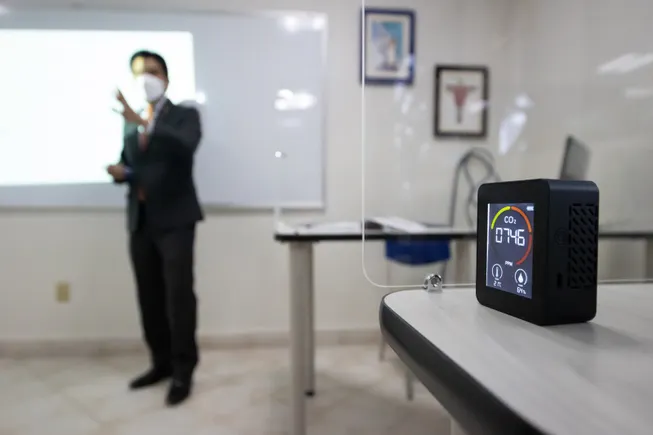
As the new school year begins, pressure to return to the office increases, and rising temperatures and worsening outdoor air quality drive more people to stay indoors. However, facility managers know that indoor air quality concerns sparked by the COVID-19 pandemic persist. According to an indoor air quality survey conducted by The Harris Poll in May for R-Zero, slightly more than half (52%) of Americans said they feel uneasy about being in crowded indoor spaces due to germs.
Katherine Pruitt, senior director of national policy at the American Lung Association, noted in an August 15 NPR article that many other threats lurk in the indoor air we breathe every day. "Generally speaking, fresh outdoor air is always better than no fresh air," Pruitt said. While the exchange of indoor and outdoor air makes HVAC systems a primary pathway for airborne hazards to enter buildings, the EPA points out that moisture, combustion sources, cleaning supplies, paint, pesticides, and building materials are other concerning sources of indoor air pollution.
Pruitt noted that high humidity, flooding, and leaks can "promote the growth of bacteria, pathogens, mold, dust mites, allergens, or actual toxins," adding that combustion devices such as gas stoves and heaters can emit carbon monoxide.
Tyler Smith, vice president of healthy buildings at Johnson Controls, said in an interview that climate change-related issues, particularly heat waves and wildfires, are also affecting building occupants and operators. As more employees return to the office, they expect buildings to provide comfort and refuge from the heat.
New recommendations from the CDC, new indoor air standards issued by ASHRAE, and market demand for healthy buildings are collectively driving owners and operators to improve indoor air quality. ASHRAE standards will gradually become mandatory as states and municipalities adopt new building codes.
"There has been a surge in demand for healthy buildings in the context of an already changed climate."
— Jason Hartke, Executive Vice President of Advocacy and Policy, International WELL Building Institute (IWBI)
In addition to addressing the numerous indoor air quality issues mentioned above, facility managers must also meet sustainability goals, maintain tenant comfort, maintain and service ventilation systems, and control budgets—which seems like a daunting task. But experts say it can be done.
Indoor Air Quality, Energy Efficiency, and Decarbonization
"There is a misconception that you either have a decarbonized building or a healthy building with good indoor air quality, but not both," said Johnson Controls' Smith. "We exist to eliminate that misconception and to educate and train (operators) on how to achieve both." Smith said the intersection of air quality and decarbonization is the top priority area for his team.
Improving indoor air quality requires accurate, continuous air quality measurements to provide data-driven insights that reassure office workers they are "breathing healthier, safer indoor air," wrote Tom Kennedy, president of air quality measurement company TSI, in a commentary for Facilities Dive.
Smith noted that monitoring indoor and outdoor air quality and ensuring HVAC and ventilation systems operate properly is very important. This comes down to proper maintenance schedules and execution, such as regularly replacing filters, and implementing weatherization strategies, such as retrofitting windows with glass that keeps heat out of buildings.
In an interview, TSI's Kennedy also proposed two other strategies for improving indoor air quality: dilution, which involves bringing in fresh outdoor air that is better than indoor air; and filtration, including the use of ionization filters to capture and separate particulate matter. Kennedy also recommended using dedicated ventilation systems to isolate particulate matter from sources such as copiers, printers, and cleaning supplies, preventing it from mixing with building air.
Benefits
These experts say improving indoor air quality brings numerous benefits to the health and well-being of occupants.
"From a climate perspective, there is a range of environmental impacts. But there is also a range of health impacts," said Jason Hartke, executive vice president of advocacy and policy at the International WELL Building Institute, in an interview. "There has been a surge in demand for healthy buildings in the context of an already changed climate."
IWBI, which certifies building health through its WELL Building Standard, highlighted these benefits related to cost and productivity in its December 2022 report, "Investing in Health Pays Back."
The report found that higher ventilation rates can increase employee productivity by $6,500 to $7,500 per person per year, while raising the minimum ventilation rate in U.S. offices from 8 to 15 liters per second could yield economic benefits of approximately $38 billion annually. IWBI's research also noted that improving indoor environmental air quality can enhance cognitive function by 61% to 101%.

Hartke added that while many operators consider how indoor environmental improvements can help boost employee productivity or health, they lack awareness of the significant financial returns that healthy buildings bring.
"Healthy building certification helps increase rental premiums by 4.4% to 7.7%," he said, citing research from the MIT Center for Real Estate. "These are tangible economic benefits and a major driver, but... this aspect of the business case has not received enough attention."
Conversely, a study by the National Institutes of Health (NIH) highlighted the high costs of air-related employee illness in the U.S. The study found that respiratory infections reduce productivity by approximately $19.4 billion annually, equivalent to $1.9 billion to $2.7 billion in productivity losses. Improving indoor air quality could reduce these infections by 10% to 14%. According to other research from the Harvard T.H. Chan School of Public Health and Harvard Business School, better indoor air quality management can "conservatively yield returns of $750 to $800 per employee per year."
The Harris Poll indoor air quality survey showed that 74% of employees would prioritize a healthy indoor environment over additional monthly personal allowances or free lunches.
Paying for Upgrades
Labor shortages and capital improvement costs mean implementing strategies to improve indoor air quality is not always easy or cheap. With concerns about a recession and declining leasing activity, facility managers may struggle to justify costs to owners and investors. Therefore, private and public sector organizations have begun conducting cost-benefit analyses of buildings to determine how future cost savings can subsidize building retrofits and upgrades.
"When we are successful, it is because we have a plan... a five-, ten-, or twenty-year facility capital plan," said Randy Fink, managing director of property management at JLL, in an interview. "Often, as new technologies or new vendors emerge, we conduct payback analyses and ask: 'Will this pay back in one year, five years, or never?'"
"For existing buildings, these types of capital projects are huge, so this is not something that can be decided hastily. But as opportunities arise, it is an opportunity to leverage necessary capital expenditures and simultaneously use them for sustainability and driving energy efficiency," Fink said.
Hartke pointed to recent changes in the IRS Section 179D tax deduction for commercial buildings, an incentive designed to make certain buildings more energy-efficient. This deduction has been in effect since 2006 but only became permanent at the end of 2020, and a new enhanced version was signed into law last August as part of the Inflation Reduction Act.
"This incentive has been around for a long time, but it hasn't had much room to develop," Hartke said. He explained that previously it was often applied retroactively, which made it difficult to effectively allocate capital for building improvements.
"This tax deduction has a huge impact on driving energy efficiency, and there are many synergies between energy efficiency and improving indoor air quality. Many of the solutions being adopted are more integrated, and (owners and operators) are getting a greater return on investment," he said.
Smith noted that measuring and benchmarking building performance is crucial for finding cost-effective upgrade strategies because it can identify inefficiencies. Eliminating these inefficiencies may lead to significant cost savings.
"This will minimize, or even completely offset, the costs of retrofits such as blinds or white roofs," Smith said. "We always need to start here. We must confirm that the building is actually operating the way we think it is."
Benchmarking is also key to obtaining certifications for energy efficiency, sustainability, and healthy buildings such as LEED, ENERGY STAR, and WELL.