
Regulatory Trends Employers Should Watch After the End of the Chevron Doctrine
After the U.S. Supreme Court overturned the Chevron doctrine on June 28, federal courts have begun applying new standards to review Department of Labor regulations. A Texas judge was the first to cite the ruling to question overtime rules, but the nationwide impact will take time to unfold. Experts note that in the long term, agencies may craft rules more cautiously, and employers should continue to comply with existing regulations while engaging in rulemaking through public comments and legislative communication.
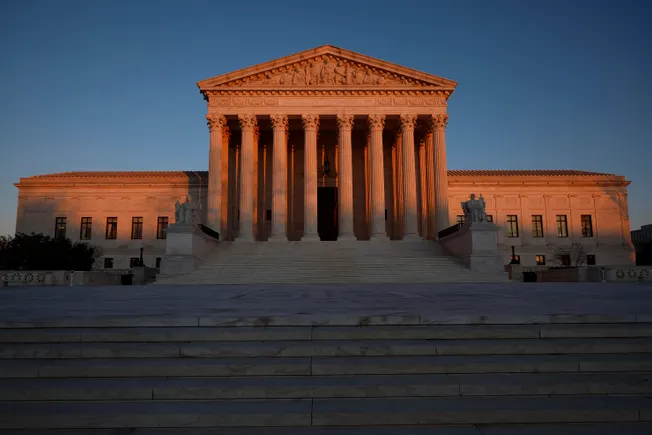
Federal courts were quick to begin applying the Supreme Court's landmark June 28 ruling—Loper Bright Enterprises v. Raimondo—which overturned the court's previously established "Chevron deference" standard.
In fact, on the very day the Supreme Court issued itsLoper Brightruling, Judge Sean Jordan cited it in his analysis of the Department of Labor's (DOL) overtime regulation under the Fair Labor Standards Act (FLSA). Jordan held that the DOL, by setting a salary-level test in the final overtime rule, effectively "supplanted" the FLSA's exemption from overtime based on specific duties, thereby exceeding its statutory authority.
Jordan temporarily blocked the rule's application to Texas employers, and although his ruling has limited nationwide applicability, the rule still faces multiple legal challenges. As a result, it could become the first agency regulation to be reviewed by federal appellate courts in the post-Chevron era, said Alex MacDonald, a shareholder at Littler Mendelson.
Long-term impact of overturning Chevron
BeforeLoper Brightfederal courts—following the Supreme Court's 1974 ruling inChevron v. National Resources Defense Council—typically deferred to agency interpretations of ambiguous statutes. "That is no longer the prevailing approach," MacDonald said. "Ambiguity alone is no longer enough to trigger deference."
Instead, the Supreme Court ruled late last month that courts must "exercise their independent judgment in deciding whether an agency has acted within its statutory authority," in accordance with the Administrative Procedure Act.
Paul DeCamp, a member of Epstein Becker Green and former administrator of the DOL's Wage and Hour Division, said the ruling could invalidate several DOL regulations, but employers may not see an immediate impact. Part of the reason is that the court did not overturn any prior decisions made under itsChevronprecedent.
"The long-term impact is that eliminating Chevron deference may force agencies, including the DOL, to be more thoughtful and careful when crafting regulations."
—Paul DeCamp, member of Epstein Becker Green, former administrator of the DOL's Wage and Hour Division
Additionally, the court clarified thatLoper Brightdid not overturn its 1944 ruling inSkidmore v. Swift & Co.which allows courts to consider certain agency "interpretations and opinions" as guidance. MacDonald noted that this was later reformulated by federal courts as a form of deference to agencies, but the level of deference articulated inSkidmoredid not reach the level granted to agencies underChevron.
Now, with Chevron deference abolished, the "heavy thumb on the scale" for the government has been removed, and courts will no longer give special status to interpretations by agencies like the DOL, DeCamp said.
"The long-term impact is that eliminating Chevron deference may force agencies, including the DOL, to be more thoughtful and careful when crafting regulations," DeCamp said. "In the long run, this will lead to better regulations that align more closely with congressional intent."
However, others hold a different view, expressing concern thatLoper Brightcould lead courts to become more deeply involved in policymaking. Jim Townsend, director of the Levin Center for Oversight and Democracy at Wayne State University, said the ruling reflects a misunderstanding of the regulatory process.
"Congress often plays an important role in oversight and providing input," Townsend said. The claim that agencies deliberately ignore congressional intent "is not true," he added. "That's just not the case."
DOL regulations may face challenges in federal courts
DeCamp noted that another long-term effect worth watching for employers is that the pendulum swing of regulatory actions between election cycles may be somewhat mitigated by theLoper Brightruling.
"Of course, when administrations change, policy preferences often shift dramatically—that's part of the normal ebb and flow of the electoral process. I don't think that will change," he added. "But eliminating Chevron deference and the pressure it placed on agencies will help mitigate that 'seesaw' effect."
Few DOL regulations illustrate this effect better than its independent contractor rule. The DOL recently finalized an updated independent contractor rule, which took effect in March. MacDonald believes that rule is an example of the DOL interpreting a statutory term that could be viewed as ambiguous—the definition of "employee" under the FLSA—and potentially exceeding its authority, making it vulnerable to challenge in the post-Chevron era.
DeCamp said courts will still need to consider agency expertise when deciding whether regulations are valid, especially those involving highly technical or scientific terms. But he also noted that many regulations the DOL has issued in recent years do not necessarily fall into that category.
"Given the court's ruling, I would be hard-pressed to find any example from DOL regulations issued over the past few decades that is based on technical expertise rather than policy preference, especially from the Wage and Hour Division," DeCamp said.
DeCamp added that this does not mean all or most DOL regulations are invalid, nor would courts find them so. But ultimately, "the framework for analyzing these regulations will be less deferential to the DOL than in the past," he said.
Employers can prepare and get involved
That said, MacDonald said this does not mean HR departments should expect controversial regulations to be overturned immediately, and existing compliance obligations still apply. He added that agencies may decide to issue sub-regulatory guidance, such as opinion letters, rather than updating regulations in the future.
"We're not going to immediately upend the status quo," MacDonald said. "All the cases decided underChevronremain valid. You can still rely on the Code of Federal Regulations. It's just that going forward, regulations will face stricter scrutiny, and you may see fewer of them."
DeCamp similarly noted that existing federal regulations remain valid, even as employers have opportunities to challenge particularly vulnerable regulations and submit public comments on proposed rules; "employers should not viewLoper Brightas a license to violate the law," he said.
Meanwhile, Townsend said employers may also benefit from engaging with members of Congress, particularly committee chairs and ranking members, to provide input during the legislative process. He added that while ensuring a more stable regulatory environment is not solely the responsibility of regulated parties, collaboration can help.
"More dialogue with these communities... can better establish the meaning of statutory terms and the connection between regulations and the underlying laws," Townsend said. "Otherwise, we face a vacuum."
Correction: A previous version of this article incorrectly identified Townsend's affiliation. He is a director at Wayne State University.
