
Texas, Florida, and Phoenix Heat Regulations Face Tests
Memorial Day in the United States marks the start of summer, but heat poses health risks to outdoor workers. Texas and Florida have passed laws prohibiting local governments from mandating that employers provide water breaks, while Phoenix requires contractors to develop heat safety plans. OSHA is advancing a federal heat standard, but enforcement still relies on the General Duty Clause.
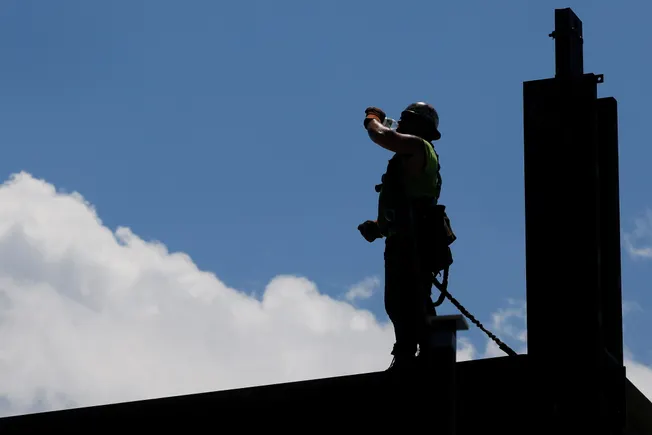
As Memorial Day kicks off the summer season, days grow longer, allowing contractors to advance projects faster than in winter. However, summer heat is scorching many parts of the United States, posing a threat to the health of outdoor workers. In recent years, labor safety in hot climates has drawn national attention, especially as research shows global temperatures continue to rise and are expected to climb further.
According to NASA data, many regions worldwide experienced their hottest period in 2,000 years last summer. Miami broke its record for the hottest July on record; El Paso, Texas, saw temperatures exceed 100 degrees Fahrenheit 70 times; and Phoenix reached 110 degrees Fahrenheit 54 times.
For outdoor workers in some states, this summer will mark the first implementation of new rules—or, in some cases, bans on mandates—regarding water and rest breaks. Texas and Florida have passed laws prohibiting municipalities within their borders from requiring employers to provide water breaks for workers.
Florida Governor Ron DeSantis signed House Bill 433, which since July has prevented counties and cities in the state from enacting their own heat safety regulations. The Texas law, dubbed the "Death Star Bill" by opponents, is already in effect, but cities such as Houston and San Antonio have filed lawsuits.
Most of the U.S. experienced above-average temperatures last summer

These laws do not prohibit employers from providing breaks to employees; they only stipulate that local governments cannot mandate them. On the other hand, the Phoenix City Council voted unanimously in March to pass an ordinance requiring companies contracting with the city, including subcontractors, to develop and document heat safety plans. The plans must include:
- Providing free, cool drinking water.
- Allowing employees regular, necessary rest breaks.
- Providing shade or air-conditioned facilities.
- Implementing heat acclimatization measures.
- Providing training on heat illness and injuries.
The reason state governments block cities and counties from mandating breaks is to avoid businesses facing a patchwork of inconsistent rules, such as one job site requiring breaks while another does not. Florida Democratic State Representative Anna Eskamani told Construction Dive when the bill passed: "I understand the concern, but these requirements are very basic and not onerous or overly burdensome." She added that companies operating across regions typically have the resources to track different rules.
Opponents such as the American Civil Liberties Union (ACLU) argue that these laws banning mandates hinder worker protections, making it easier for employers to deny employees breaks and other safeguards.
Protecting workers
As some cities and states legislate, the U.S. Occupational Safety and Health Administration (OSHA) has begun developing federal guidelines. Although the agency has established specific standards for hazards such as falls, trenching, steel erection, and volatile substance handling, there is no explicit rule protecting workers from heat.
OSHA is developing a heat safety standard and cleared a hurdle in the rulemaking process in April. OSHA leadership has stated the matter is a priority. Doug Parker, Assistant Secretary of Labor for Occupational Safety and Health, told Construction Dive at a construction safety event earlier this month: "We are working to roll out a proposed rule."
In maintaining safe job sites, the Occupational Safety and Health Act of 1970 requires employers to eliminate hazards and ensure workplaces are free of "recognized hazards that are causing or are likely to cause death or serious physical harm." In 2022, OSHA launched a National Emphasis Program through which it educates and emphasizes three key measures for addressing extreme heat: water, rest, and shade.
Enforcement is another matter. OSHA does not view itself as a punitive enforcer; Parker has said the best way to curb industry hazards is not through citations but by partnering with industry leaders to raise awareness and embed safety into culture. Nevertheless, OSHA can only cite employers who fail to protect workers from extreme heat under the General Duty Clause (5(a)(1)). Such violations cannot be used for repeat citations, thus preventing higher fines for subsequent violations.
Heat response recommendations
Despite the lack of national regulations, most contractors follow their own common-sense practices to ensure worker safety in summer. OSHA also offers recommendations, stating that taking basic measures can prevent worker illness. For example, OSHA notes that nearly three-quarters of heat-related injuries occur within the first week of working in hot environments, indicating that employers should help workers gradually acclimate to seasonal changes; taking time to adapt to heat helps workers adjust.


The agency's recommendations on heat acclimatization include:
- Scheduling workers for shorter shifts and more frequent breaks in the heat.
- Training workers on heat stress and its symptoms.
- Monitoring new workers for these symptoms.
- Implementing a buddy system.
- Allowing workers new to heat to stop working if symptoms appear.
Safety officials also say workers should drink a glass of cool water every 20 minutes, even if not thirsty. Additionally, the agency recommends wearing breathable clothing, monitoring workers for signs of heat stroke, and taking frequent breaks in the shade. Parker told Construction Dive: "It's everyone's responsibility to take a values-driven approach to health and safety and embed it into the culture from the top of the organization to the front lines."