
Dartmouth College Invests $500 Million to Decarbonize Campus Heating System
Dartmouth College announced a $500 million investment to upgrade its campus heating infrastructure, transitioning from a steam system to a hot water system, expected to improve energy efficiency by 20% and support goals of reducing emissions by 60% by 2030 and achieving carbon neutrality by 2050. This investment accounts for one-quarter of the college's capital improvement plan and is the largest sustainability investment in its history.
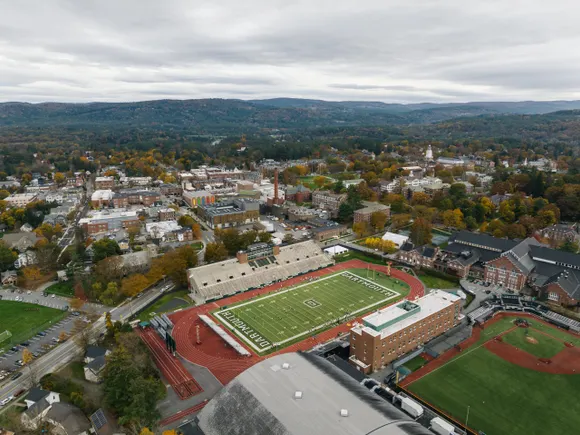
This April, Dartmouth College announced a notable investment plan, committing$500 millionto enhance campus sustainability. However, the measures the college is actually taking to reduce its environmental impact are not so conspicuous—in fact, few people on campus will see these changes firsthand, because most of the funds will be used to retrofit the campus's heating infrastructure, converting the existing steam system to a hot water system.
The senior vice president of capital planning and campus operations, who oversees the college's energy transition,Josh Kenistonsaid, "Hot water doesn't look sexy or innovative, but it's actually a much more flexible technology than steam." The hot water system Dartmouth is building includes numerous distribution points, among thema thousand underground boreholes—meaning the related infrastructure is almost entirely invisible.
The distributed nature of the system also means there is no need for centralized heating facilities. Instead, the college can employ a variety of heating methods, such as electric heat pumps and solar thermal pumps, and can even store water heated during New England summers for use in winter. This provides multiple pathways for energy use.
The transition to a hot water system—replacing aging infrastructure that was already in need of major repairs—will bringa 20% efficiency gain. Keniston noted, "You lose a lot of energy distributing through steam." These energy savings will help offset the investment costs in the coming years.
This infrastructure overhaul is part of campus emissions reduction efforts, aiming tocut emissions by 60% by 2030and achieve100% carbon neutrality by 2050. It is also linked to broader research, academic, and community engagement initiatives on campus.
In fiscal year 2022, the college reported approximately58,500 metric tonsof greenhouse gas emissions. The college says it is on track to meet most of its long-term reduction goals, but acknowledges it may fall short of its 2025 target of reducing carbon emissions to38,414 metric tons.
According to Keniston, Dartmouth's $500 million investment represents about a quarter of the college's overall capital improvement plan. In addition to the hot water system conversion, the investment includes energy efficiency measures such as improving building envelopes, and funds non-combustion technologies like geothermal exchange boreholes, large heat pumps, and solar power for electricity generation and hot water production.
Dartmouth PresidentSian Beilockwrote in a letter to campus in April that this expenditure is the largest sustainability investment in the college's history. In the letter, she acknowledged, "Our past efforts to decarbonize campus have fallen short. Our new, more aggressive goals are designed to help us lead in campus sustainability—especially in colder, more remote climates."
Sources of emissions: heating, electricity, and conferences
Dartmouth is just one of thousands of colleges and universities in the U.S., and it is a well-endowed one, with annual revenues of$1.4 billionand assets of$11.7 billion. Meanwhile, many other institutions are struggling to balance budgets or even stay afloat.
Although the higher education sector may account for arelatively small shareof U.S. emissions, it still has about4 million employeesand over18 million studentsconsuming energy and resources. On many campuses, there remains significant room to cut emissions, including at institutions less resourced than Dartmouth.
According to the program director of the Association for the Advancement of Sustainability in Higher Education,Julian Dautremont, about a quarter of higher education institutions are leaders in sustainability. He said, "The other three-quarters are more uncertain. I believe they're doing recycling and energy efficiency work, so it's not like they're doing nothing, but the gap is significant."
One of the largest sources of emissions for colleges is their own electricity and heating infrastructure (like Dartmouth's heating system), as well as electricity purchases. According to the senior client manager of planning services at facilities intelligence firmGordian,Sophie Masonfixed utilities (including on-campus infrastructure that burns fossil fuels) account for an average of35.8%of total emissions at colleges. Purchased electricity and indirect utilities account for another32.8%。
The hustle and bustle of college life also brings a significant emissions footprint. Employee and student commuting accounts for an average of11.8%of emissions, while other travel (including academic and leadership conferences) accounts for11.5%。
So far, efforts to reduce climate emissions have focused primarily on electricity procurement. Dautremont said that power purchase agreements (PPAs) are one of the key strategies for colleges to lower their carbon footprint. PPAs provide institutions with long-term electricity procurement contracts and can focus on green energy. College groups can also leverage these agreements. For example,nine institutionsin North Carolina and Pennsylvania are collaborating on a PPA aimed at offsetting each member institution's current energy use and supporting a solar project in Kentucky.
Dautremont noted that as PPAs become relatively common, the frontier for emissions reduction is now campus heating systems. That's where Dartmouth is putting its money.
Sustainability on a budget
But colleges have many other potential tools to reduce their energy and environmental footprint without requiring $500 million in capital expenditures. Mason and Gordian's planning services client managerDuncan Ketelpoint out that temperature control is a simple way to save energy—by lowering heating intensity in winter and cooling intensity in summer.
Mason said that avoiding emissions is one of the most important things colleges can do. This might mean renovating existing buildings and improving their efficiency in the process. From an emissions perspective, renovation is preferable to new construction, especially when older buildings are less efficient but still in use.
Dautremont noted that reducing procurement of items like paper and printers (thereby reducing indirect emissions) is also a way to lower the carbon footprint. He also suggested that removing trays in campus dining halls can reduce food waste and the associated emissions from food production and preparation, at nearly zero cost to the institution.
Reducing car commuting and employee business travel would also have an impact on campus emissions. Mason noted that travel for conferences and other events decreased during the pandemic but has been trending back up since 2020. However, cultural and structural barriers remain at many institutions.
Mason said, "There may be opportunities to reduce travel—through virtual or remote meetings to connect with prospective students or alumni. But in many cases, universities see that as a second-best option. Face-to-face interaction is very important to them." As for commuting, efforts to get students and staff to bike or take transit more often depend largely on the municipal infrastructure of the city where the university is located. But even tweaks on the outreach side, like carpooling, can make a difference.
Ketel said, "If I used to drive alone and now carpool with three classmates, that's a shift. It costs the university nothing, just staff time for outreach."
Perhaps one of the most important tools lies in the organizational approach to sustainability. Mason suggests, where possible, not viewing sustainability in isolation but looking for "connections and overlaps with other areas that already have investment momentum," such as deferred maintenance and research, where capital expenditures can serve dual purposes.
At Dartmouth, Keniston said the shift to a smaller-scale investment mindset helped redefine what's possible. For example, instead of completely overhauling the heating approach (which previously considered replacing No. 6 fuel oil with a biomass plant), moving to a hot water system allowed it to address heating infrastructure incrementally. Keniston said, "Allowing ourselves to take small steps that accumulate over time led us to adopt different technologies. It also gave us flexibility in construction management and financial management. If the economy fluctuates and we have to pause, we won't be left with stranded assets."