
Healthcare facility managers struggle to balance technological, spatial, and workforce challenges
Healthcare facility managers struggle to balance technological, spatial, and workforce challenges. This is the second article in a series, focusing on key issues in hospital and outpatient facility management: maintenance of aging equipment, infection prevention and control, workforce shortages, and technology adoption. Experts point out that urgent issues such as equipment aging, insulation deficiencies, and talent shortages need to be addressed, and data-driven approaches and AI technology may be key to breaking the deadlock.
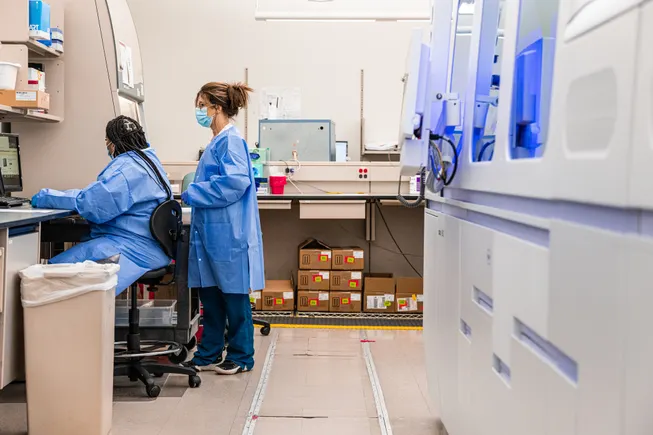
Healthcare facility managers are walking a tightrope of technological, spatial, and workforce challenges. As the second installment in a series, this article focuses on the complex landscape faced by frontline workers in hospital and outpatient care facilities.
At 5 a.m., Robert Melton is already testing emergency generators and utility power at Cape Fear Valley Health Systems' facilities. He oversees maintenance for the organization, serving as corporate engineer and director. "We test generators under load conditions at least monthly, so we must ensure we don't disrupt surgeries," Melton says. He knows that without proactively communicating with clinical care teams to schedule such inspections and tests, a 5- to 7-second power outage could occur during a procedure. He relies on a computerized maintenance management system that alerts him when refrigerators storing insulin, vaccines, and other critical medications fall outside temperature ranges.

In healthcare facilities, "the pain points are more operational," says Arvin Vohra, CEO of Redaptive, a company that works with facility managers across multiple organizations. "Healthcare facility managers have maintenance tasks that are inherently more critical because lives are at stake. You can't shut down the HVAC system for a day, and you can't have the lights go out in an operating room."
At Cape Fear Valley, Melton manages a facilities team of 75 people across nine hospitals, outpatient care clinics, and behavioral health units in North Carolina. He is one of many healthcare facility managers using AI tools, data analytics, and the Internet of Things to optimize operations, allocate resources, and improve patient experience. The challenges brought by these technological advances add to already tight budgets and decarbonization pressures. Facility workers in older hospital buildings especially must carefully balance managing outdated infrastructure with timing investments in technology and energy-efficiency upgrades.
Aging infrastructure and infection risk
Many hospitals are older buildings with aging infrastructure and equipment. This can mean cracks in walls and pipes, deteriorating insulation systems, and outdated equipment that consumes more energy than modern designs. Industry standards show that most air handling units are designed for a 25-year lifespan. Dedicated facility management staff may manage to keep equipment running reliably for another 5 to 10 years. "But most hospitals have equipment that is over 40 years old," says Alison Flynn Gaffney, president of JLL's healthcare division. "The best scenario for equipment replacement is when organizations can leverage new technology and efficiencies. The pandemic showed us how to isolate and redirect HVAC systems, and that lesson isn't going away."
In many of these buildings, mechanical insulation systems are not adequately inspected, which adds to the difficulty for hospital facility managers, notes Pete Ielmini, executive director of insulation and fireproofing at the Mechanical Insulators Labor Management Cooperative Trust. "Hospital mechanical systems run 24/7. In a four-story hospital, there are 17 miles of insulated piping and pipe space equivalent to 10 football fields. But about 10% to 30% of insulation in most hospitals is missing or damaged," Ielmini says. His organization recently supported a bipartisan bill requiring mechanical insulation efficiency assessments in 350,000 federal buildings.
Older hospitals and clinics are being renovated to accommodate the latest treatments, but renovations bring new risks, including air leaks in ducts hidden within walls. Sealing these ducts without breaking through walls is often difficult. "When renovations occur, insulation is removed and sometimes not reinstalled," Ielmini says. Improperly installed or missing insulation provides an opportunity for moisture to accumulate within the installation layers. Mold and bacteria growth hidden within the walls of HVAC systems in older buildings become breeding grounds for infection in exam rooms and operating rooms, he explains. "If you look at old duct installations and see black spots, that's mold. You don't want moldy insulation in an operating room where infection risk is extremely high. You must install vapor barriers to prevent moisture from entering, and you need proper protective coatings on insulation to prevent mold and bacteria buildup," he warns.
Workforce shortages
Facility managers often contend with aging equipment and technology upgrades while facing reduced staffing. A shortage of qualified candidates, combined with baby boomer retirements and inadequate succession planning, has left vacancies in critical fields such as engineering. In response, some departments are temporarily hiring or rehiring former employees to fill long-term gaps. Carol McCormick, director of facilities at CHI Health Immanuel and Mercy Hospital in Iowa, is one example: she rehired a retired employee on a twice-weekly schedule to fill a year-long engineering vacancy, according to Health Facilities Management Magazine.

"The staffing shortage is here to stay," says Gaffney, who before joining JLL oversaw administrative and financial operations for inpatient and outpatient facilities at a large academic medical system. She notes that executives are looking to technology to fill at least part of the gap, which may require new ways of operating. "Facility managers have historically had a preventive maintenance mindset, with schedules for every area. But technology can ease the burden on staff. AI can reduce physical labor... and enable more predictive maintenance, which has a ripple effect on the resources needed to be efficient," she adds.
Gaffney also emphasizes using patient outpatient visit data based on predictive models to optimize energy use and reduce crowding and wait times in patient care areas. "How many no-shows do we have? How many cancellations? How many times is a physician called away urgently? All that data is there. The key is how we use it to improve efficiency," she says. By analyzing outpatient data, facility managers can better understand peak hours, busy periods, and seasonal variations in patient flow. "For example, if certain exam rooms are consistently overbooked, additional rooms could be added to optimize patient flow and reduce congestion," she explains.
Some hospitals are moving in this direction. Methodist, a 12-hospital system in Texas, partnered with JLL to enhance cost savings, system standardization, and performance through data and business intelligence. JLL says Methodist is on track to achieve $5 million in net savings over five years. But data-driven insights haven't made finding skilled labor easier in the post-pandemic era, Vohra notes. "Before the pandemic, open positions could be filled in four weeks; now, filling a vacancy often takes two months," he says.
Technology hurdles
Implementing new technology and moving beyond the pandemic remain key issues for healthcare facility staff. In this context, modernizing and maintaining operational facilities in buildings constructed before the 1980s is a core requirement, these executives say. Richard Taylor, managing director of EY's real estate consulting and technology services, points out that hospitals and outpatient clinics still have a long way to go in obtaining accurate digital data and securing capital for purchasing or upgrading facilities. He notes that facility managers lack the data to clearly understand the equipment they operate and its age.

"The complex healthcare environment is different from an office building. Having asset tracking capabilities—the ability to capture asset data—would be a huge improvement," Taylor says. "Healthcare facility managers are seeking to understand how to effectively use technology, and what the younger generation thinks—how they use these facilities, what they seek in a healthcare environment." Even so, many large hospitals lack basic technology infrastructure, such as reliable Wi-Fi to obtain accurate information (like physician prescription details), Taylor notes. "If you consider a 1 to 2 million square foot hospital, there's a lot of work to be done to improve connectivity," he adds.
Space constraints
Gaffney recalls the surge of drive-through testing and vaccination sites during the pandemic when hospitals faced ICU bed shortages. Facility management teams fully supported the pandemic response, retrofitting air handling systems and creating food markets within nutrition care services to provide convenient dining options for hospital staff. "We sat around tables, sometimes adjusting plans by the hour," she recalls. "Many facility managers stepped up to save lives." Remote patient monitoring and telehealth options have grown rapidly since the pandemic, but their use hasn't eased the challenge for facility managers to optimize and utilize limited space and resources to serve inpatients. Given space constraints, certain services that don't need to be performed in hospitals are being shifted to smaller outpatient facilities and satellite sites. "Health systems don't have enough days in the week," Gaffney says. "Creating spaces that support higher space utilization and provide timely patient care is a top priority."