
Hospital facility teams face dual pressures of funding constraints and decarbonization challenges
Facility managers at hospitals and outpatient clinics are facing the dual challenges of limited capital access and decarbonization requirements. Healthcare spending is projected to reach $7.2 trillion by 2031, but facility departments struggle to secure funding because they do not directly generate revenue. Meanwhile, healthcare organizations must address approximately 8.5% of U.S. greenhouse gas emissions and comply with new regulations such as the HHS Climate Pledge. Experts suggest mitigating these pressures through early involvement in planning and utilizing third-party energy services.
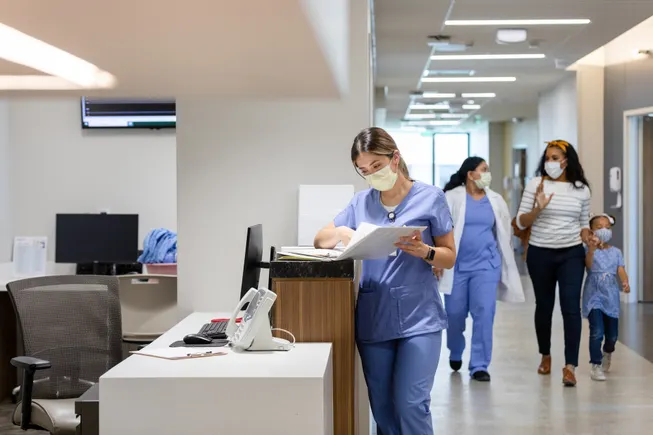
Hospitals or medical clinics often evoke a series of stereotypes: fluorescent lights, cold linoleum floors, expressionless doctors, and weary nursing staff drinking instant coffee in the break room. However, this impression is far from the reality of a healthcare industry on the cusp of transformation—even as it still stumbles along the road to recovery from the pandemic. Healthcare institutions stand at the center of this transformation, committed to improving outcomes and experiences for clinical care teams and patients.
This transformation involves a wide range of tasks, from preventing an air conditioning unit failure during a critical 10-hour brain surgery to overseeing the maintenance of the hospital gift shop—where patients can purchase comfort items after surgery. But facility managers at hospitals and outpatient clinics are facing a double whammy: on one hand, limited access to capital, exacerbated by rising costs; on the other, they must integrate sustainability into daily maintenance, repairs, upgrades, replacements, renovations, and construction projects.
Limited access to capital
Due to the growth of the elderly population and the rising prevalence of chronic diseases, patient numbers are increasing, driving healthcare spending to climb continuously. The U.S. Centers for Medicare & Medicaid Services projects that by 2031, U.S. healthcare spending will jump nearly 64% from $4.4 trillion in 2022 to $7.2 trillion, with an average annual growth rate of 5.4%. This data comes from a study recently published in Health Affairs.
The surge in healthcare costs reflects the increase in patient numbers, which accelerates the demand for investment in healthcare infrastructure and the materials needed for construction, renovation, equipment upgrades, and replacements. However, capital does not always flow to facility management teams because "facilities do not directly generate revenue, even though we support the infrastructure that does," said Andy Woommavovah, System Director of Facilities and Construction at Trinity Health. The company owns 92 hospitals and 106 continuing care facilities.
"The challenge we face is building a business case to justify capital investment, because our healthcare leadership team tends to favor projects with a return on investment within 24 to 36 months," Woommavovah added.
The Inflation Reduction Act provides multiple categories of funding mechanisms for nonprofit healthcare institutions, including energy efficiency projects. Woommavovah is leading several projects in hopes that they will qualify for this funding. "When we layer on the additional incentives from the IRA, the payback period shortens, which makes our financial leadership more inclined to prioritize funding for these projects," he said in an interview.
Some of the funding challenges could be effectively addressed if facility managers were given a "seat at the table" earlier in the planning, design, and construction process.
Alison Flynn Gaffney
President of JLL Healthcare
Hospital profit margins remain below pre-pandemic levels. According to an analysis of more than 900 hospitals by Kaufman, Hall & Associates, hospitals lost billions of dollars last year, with expenses estimated to have increased by nearly $135 billion compared to 2021 levels.
Individual medical units and smaller community hospitals are bearing the heaviest financial pressure. These institutions often lack access to capital and must prioritize life safety projects, said Alison Flynn Gaffney, President of JLL Healthcare, in an interview. "Every executive team and healthcare leader is thinking about how to balance financial constraints with investment needs," she said. "The challenge is whether funding is sufficient."
Gaffney believes that some funding challenges could be effectively addressed if facility managers were given a "seat at the table" earlier in the planning, design, and construction process. The COVID-19 pandemic prompted more mature healthcare systems to involve facility leaders in this process, but smaller institutions have not yet caught up. "This is crucial to the long-term success of projects because facility managers can contribute the knowledge the organization needs," she said.
Robert Melton, Corporate Engineer and Director at Cape Fear Valley Health Systems in North Carolina, believes that the healthcare industry is not lagging behind other industries in terms of capital access. "Healthcare is a business. You have to conduct building facility assessments to determine budget allocation and develop corresponding capital plans," Melton said. He manages a team of 75 facility staff responsible for nine hospitals, outpatient clinics, and behavioral health facilities.
Pressure to reduce emissions
In addition to capital constraints, facility managers also face pressure to incorporate decarbonization goals into existing budgets. Healthcare institutions account for approximately 8.5% of total U.S. greenhouse gas emissions, primarily from energy-intensive equipment that operates around the clock. Pharmaceuticals, medical devices, food, and anesthetic gases also contribute to emissions.
The "Health Sector Climate Pledge" launched by the U.S. Department of Health and Human Services in March 2023 encourages hospitals to commit to reducing greenhouse gas emissions by 50% by 2030. In the same month, the Joint Commission, a healthcare research and standards-setting organization, was developing new requirements to improve patient safety by addressing environmental sustainability, applicable to hospital and critical access hospital accreditation programs. The Commission stated that healthcare institutions can no longer ignore their impact on greenhouse gas emissions. The subsequent comment period encountered opposition from healthcare institutions, which argued that the proposed requirements were unfunded mandates imposed on them.
"This mandate will be very difficult for us to achieve. We struggle to understand the connection between sustainability and patient safety. We are already dealing with low profit margins, so we must be careful about where we allocate funds."
Andy Woommavovah
System Director of Facilities and Construction at Trinity Health
"This mandate will be very difficult for us to achieve," Woommavovah said. "We struggle to understand the connection between sustainability and patient safety. We are already dealing with low profit margins, so we must be careful about where we allocate funds."
Woommavovah noted that healthcare institutions participating in the HHS pledge must clearly state their goals. He said that without proper carbon accounting, these goals cannot be achieved, and carbon accounting requires understanding the institution's carbon footprint. "Large systems will face challenges in this regard," he said. "You have to classify whether all entities fall under Scope 1, Scope 2, or Scope 3 emissions, which requires a lot of expertise."
Woommavovah recommends that hospitals hire third-party organizations to train facility teams in greenhouse gas accounting.
"A 20-year-old CT machine has a different energy profile than a new one. Currently, the return on investment for upgrading these machines is not obvious because the traditional practice is to replace them only when they break down."
Arvin Vohra
CEO of Redaptive
Arvin Vohra, CEO of Redaptive, an energy-as-a-service provider, believes that the combination of tight budgets, rising interest rates, and higher capital costs could create new opportunities. "Sustainability-oriented capital from third-party energy-as-a-service companies and technology and service companies can fund upgrades," he noted. Redaptive recently launched a digital platform that it says can halve customer reporting costs and save up to 15% on utility bills. The company pays for upgrades upfront and then collects a return from the customer's savings.
Another challenge is that many hospital devices are aging. Older equipment typically consumes more energy, which is not conducive to emission reduction goals. The Redaptive team (whose customers include about one-third healthcare institutions) has observed that two old dialysis machines measured at an outpatient clinic had significantly higher energy demands than new dialysis equipment. "It's this kind of insight that helps make informed decisions," Vohra said. "A 20-year-old CT machine has a different energy profile than a new one, and we can see the difference. Currently, the return on investment for upgrading these machines is not obvious because the traditional practice is to replace them only when they break down. But we can provide insights showing the potential of new machines to reduce carbon emissions."
Viewing these scenarios from a broader perspective can lay the foundation for a more sustainable, patient-centered healthcare environment.
