
U.S. Public Facilities Backlog Maintenance Projects Total Billions of Dollars, Presenting Opportunities for Contractors
Public entities such as cities, school districts, universities, hospitals, and law enforcement agencies across the United States have long faced facility maintenance backlogs, with total upgrade costs reaching billions of dollars. As federal, state, and local funding gradually becomes available, a large number of projects will commence in 2024 and in the coming years, offering broad market opportunities for private-sector contractors.
Mary Scott Nabers is the CEO of Strategic Partnerships Inc., a research and consulting firm, and the author of "Inside the Infrastructure Revolution – A Roadmap for Rebuilding America." The views expressed in this article are solely those of the author.
Deferred maintenance is a major challenge facing numerous public entities across the United States, including cities, counties, school districts, universities, hospitals, and law enforcement agencies. Upgrading these facilities will cost billions of dollars, and the longer the problem is delayed, the greater the financial burden on taxpayers.

In recent years, federal, state, and local governments have prioritized funding to begin this slow and challenging resolution process. Multiple new initiatives have been launched to address maintenance issues, and a large number of public assets are currently in various stages of repair, renovation, or replacement.
The U.S. Congress has provided dedicated funding through the American Rescue Plan and other measures, while bond elections, state budgets, and public-private partnerships bringing in private capital continue to inject funds. As a result, a large wave of projects is expected to launch in 2024 and beyond. These projects are mostly large-scale, technically complex, and costly, with strong demand for private sector collaboration.
The following is an overview of some upcoming deferred maintenance projects:
- A $300 million grant from the U.S. Environmental Protection Agency (EPA) will support the International Boundary and Water Commission in addressing its significant deferred maintenance backlog and subsequently doubling the treatment capacity of a federal wastewater treatment plant in San Diego, California. Recent assessments indicate that addressing the plant's deferred maintenance alone will require approximately $150 million before upgrades can begin. The repair scope is extensive, and no specific start date has been announced yet.
- The University of South Florida has received American Rescue Plan funds to address deferred maintenance on its campus. Approximately $28.9 million is dedicated to upgrading and improving building systems, while another $26.5 million in projects will go toward campus utility improvements. Smaller-scale projects include new roofing, network modernization, construction maintenance, energy-related equipment, and roadwork. A few small projects will begin before the end of 2023, but at least 28 more projects are planned to start in the first quarter of 2024.
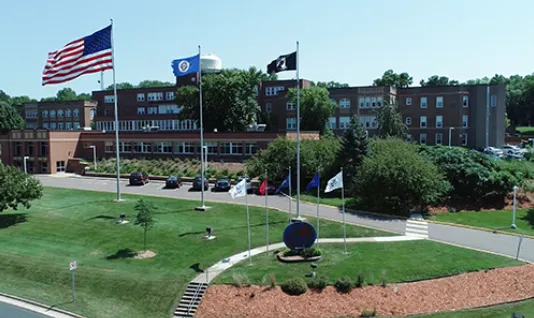
- The Hastings Veteran's Affairs Campus in Minnesota will address deferred maintenance by demolishing and rebuilding six buildings. Facilities not being replaced require immediate attention, involving extensive repairs and upgrades, including replacement of plumbing and HVAC systems. The estimated cost for the administrative facility rebuild project is $221 million, with another construction project budgeted at $194 million. Five residential buildings will be demolished and replaced by a single large residential facility designed to provide upgraded apartment units with space reserved for mental health and medical services for residents. Construction is expected to begin in 2026.
- The city of Watsonville, California, has secured $10 million through a bond election to begin deferred maintenance work. Recent projects cover repairs to city roads, parks, and the public library. Other plans include building a new nature center, renovating and maintaining multiple city trails, upgrading roads, and patching potholes. Consultants hired to prioritize projects indicate that final cost estimates could reach as high as $93 million. Construction is scheduled to begin in 2024.
How can contractors get involved in such transformative projects? Here are some key recommendations:
Stay informed.Given the diverse funding sources, including federal grants, bond elections, state budget allocations, and public-private partnerships, market opportunities will be extensive. Continuously tracking these initiatives and their specific projects is crucial.
Expand expertise.Deferred maintenance reform spans a broad range of areas, including repairs, renovations, and replacements. Contractors should be prepared to expand their scope of expertise, from building systems and utility upgrades to road repairs and infrastructure projects. This flexibility will help open more doors of opportunity.
Collaborate actively.Government agencies, educational institutions, healthcare facilities, and others will widely seek private sector partners to execute these projects. Contractors should be prepared to work with these entities and demonstrate their ability to deliver high-quality, cost-effective solutions.
Leverage federal grants.Contractors should explore potential collaborations with federal agencies such as the EPA to access available funding and secure contracts for key projects.
Prepare for complex projects.Many deferred maintenance projects are large-scale and highly complex, requiring contractors to have the capability to manage extensive repair and upgrade work. Contractors should possess the necessary skills, resources, and experience to effectively address these challenges.
Invest in workforce development.Given the strong demand for contractors, the availability of skilled labor may become a concern. Contractors should consider investing in workforce development and training programs to ensure they have a strong and capable team to handle these projects.
Watch the timeline.Some projects will start in the near term, while others may take several more years. Contractors should adjust their strategies and resource planning accordingly.
Prioritize sustainability.Many institutions are emphasizing sustainability in their infrastructure modernization efforts. Therefore, contractors that incorporate environmentally friendly practices into their projects may have a competitive advantage in securing contracts.
Adapt to local needs.Deferred maintenance priorities vary by region. Contractors should tailor their strategies to the specific needs and challenges of the areas where they operate, whether in urban infrastructure, educational facilities, healthcare, or public spaces.
As deferred maintenance reform continues to advance, market opportunities for contractors are expected to grow exponentially. By taking these simple steps, contractors can seize these opportunities, enhancing their performance while helping to address the deferred maintenance crisis.